



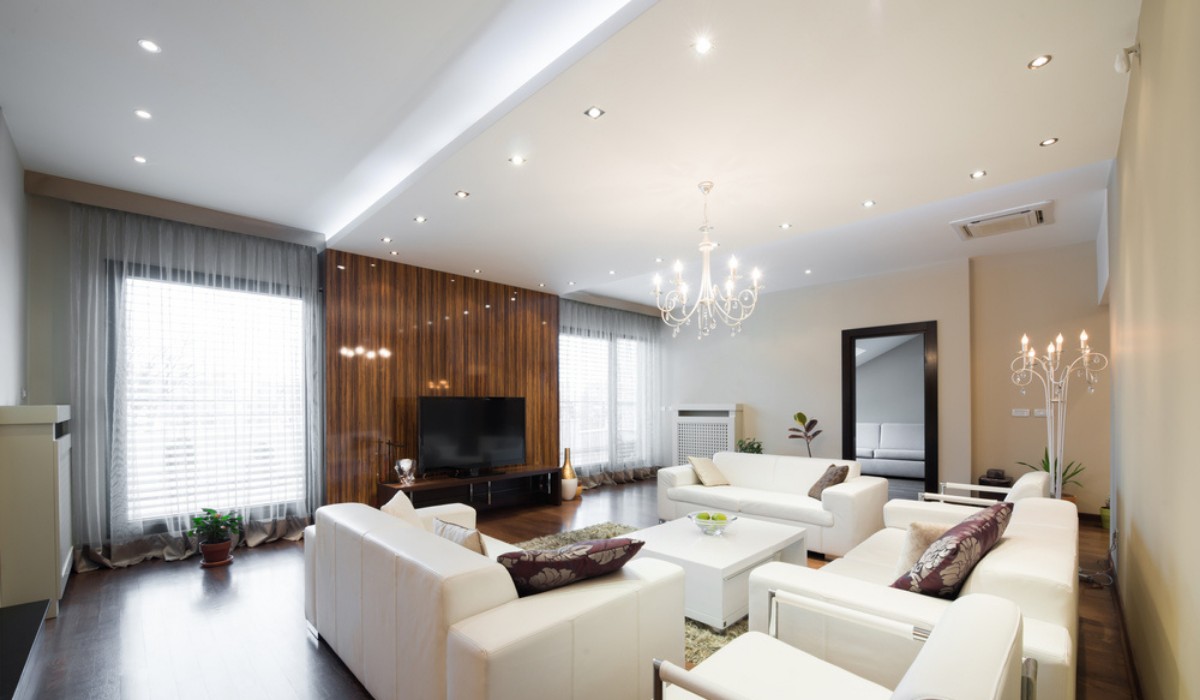
When talking about the illumination of large spaces, we sometimes overlook the importance of lighting, given that the space is spacious and will automatically contribute to the feeling of openness and brightness. However, it’s not about the volume of the space that determines how light-filled and inviting it feels, rather in regards to any space be it small or large, the application of effective lighting plays a key role in creating a cohesive, warm, and cozy environment. Discover creative lighting ideas for large spaces that enhance functionality while adding depth and character to the area.
Lighting plays an essential role in illuminating big spaces like retail stores, offices, restaurants, and residentials, each having varied requirements. In retail spaces, lighting is often used to draw attention, highlight products, and guide customer flow, often through focused spotlights and accent lighting. Offices, in contrast, prioritize lighting that supports productivity and well-being, blending ambient and task lighting to ensure comfort while reducing eye strain. Homes, on the other hand, are more about personalized affairs and aim to create warmth and comfort, with a mix of general, task, and accent lighting to suit different activities and moods. Restaurants use lighting to create a welcoming and atmospheric dining experience, employing both general and mood-setting lights to complement the ambiance and highlight key areas like tables or bar counters. Each space relies on tailored lighting strategies to foster its intended atmosphere and function. Here are a few lighting ideas for large spaces:

Lighting for Retail Spaces
Lighting in retail spaces acts as a pivotal factor in creating an engaging and functional environment that enhances the shopping experience. Effective retail lighting focuses on these key aspects:
- Highlighting Products – The main purpose in retail is to highlight products, use accent lighting to draw attention to merchandise, and showcase textures, colors, and details that entice customers.
- Customer Navigation – Bright, strategically placed lighting helps guide customer flow, creating intuitive paths and enhancing visibility across the space.
- Ambiance and Branding – Lighting should align with the store’s brand identity, whether it’s sleek and modern or warm and inviting, influencing how customers perceive the space.
- Layered Lighting – Combine ambient, task, and decorative lighting to create depth and visual interest, ensuring both functionality and aesthetic appeal.
- Use energy-efficient lighting option – Opt for energy-efficient lighting for large spaces to benefit from LED lighting to reduce operational costs and maintain sustainability.
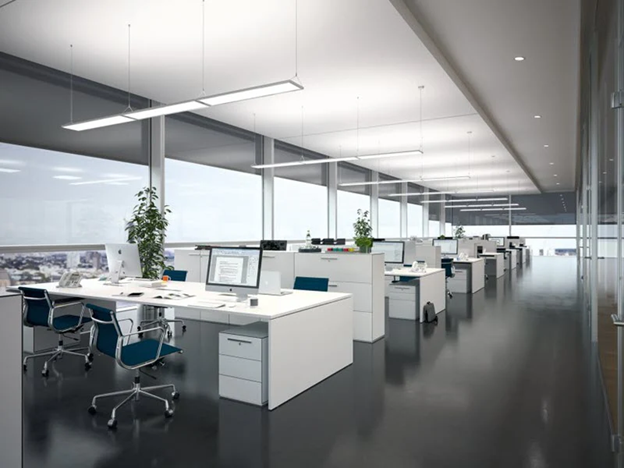
Lighting for Corporate/Office Spaces
Lighting is one of the most crucial aspects of any working environment. A well-planned lighting layout ensures everything from mood, energy, and health, a well-lit office space improves productivity and reduces eye strain and the overall health of employees. Poor lighting on the other hand can lead to headaches, eye strain, and decreased focus which indirectly contributes to poor work performance. Here are some modern lighting tips for achieving effective office lighting:
Task lighting – Ensure adequate lighting for specific work tasks, such as reading, computer work or writing. Sufficient task lighting ensures employees can work comfortably without straining their eyes.
Visual comfort – Visual comfort involves minimizing issues like glare, flicker, poor color rendering, and insufficient lighting to establish a comfortable and pleasing environment.
- Avoiding glare – Glare happens when the intensity of lights is too intense or when they reflect off to reflective surfaces like screens, glossy desks, windows, and natural light.
Solution – To avoid this use diffused lighting anti-glare screens and proper placement of shades or shades to control natural light.
- Eliminating flicker – Flickering of lights often occurs by using outdated lighting fixtures or poor-quality bulbs, which can indirectly lead to headaches or irritation in the eyes.
Solution – Use advanced technology, and flicker-free LED lighting systems to maintain steady and consistent illumination. - Poor color rendering – Poor color rendering occurs when light makes colors appear distorted, making them look different from how they would appear in natural light.
Solution – Maximize the use of natural light by positioning the work desk near the window, as it will provide the best color accuracy. While every office might not have access to an ample amount of natural light, choose lights with a high CRI (Color Rendering Index), usually 80 or above. The higher the CRI, the more accurately it will display colors. - Insufficient lighting – The most common made while planning lighting is insufficient lighting, which can indirectly hinder productivity and focus.
Solution – To ensure there is enough lighting always calculate how much light you need, multiply the room’s square footage by the recommended number of lumens per square foot, depending on the type of room (e.g., 20 lumens per square foot for living areas or 30 lumens per square foot for work areas).
Use energy energy-efficient lighting option – Opt for energy-saving options like motion sensor lights, energy-saving LEDs and daylight integration. They not only reduce the cost but also align with sustainability goals.
Flexibility and Adaptability – Incorporate adjustable lighting systems to cater to diverse needs throughout the day. Dimmers, smart lighting, and personal controls allow employees to customize lighting based on their preferences.

Lighting for Restaurants
Ambience in restaurants goes beyond decor. One important factor that is often overlooked is lighting. To some it may seem that it’s just about functional necessity, but studies have shown that lighting directly affects the gastronomical and customer’s dining experience. The right lighting can set the mood and influence how customers perceive their meals. Thoughtful lighting design can transform a simple meal into a memorable event, elevating the atmosphere and contributing to the restaurant’s identity. Here are a few effective lighting tips for restaurants:
- Consider color temperature – Color temperature plays a pivotal role in enhancing the ambiance, mood, comfort, and dining experience of a restaurant. Warm lights create an intimate atmosphere, while cooler light enhances focus and productivity in specific areas.
- Ensure balanced lighting solution – Avoid overly bright spots and harsh shadows by distributing light evenly throughout the space and focus on balancing the ambiance based on time and preference of the customer through lighting.
- Highlight architectural details – Highlight architectural and design elements such as artwork, textured walls, or unique furniture with task light to create an aesthetically pleasing environment.
- Use energy-efficient lighting option – Opt for LED bulbs and energy-saving lighting options to reduce electricity consumption while maintaining high-quality illumination and long-lasting performance.
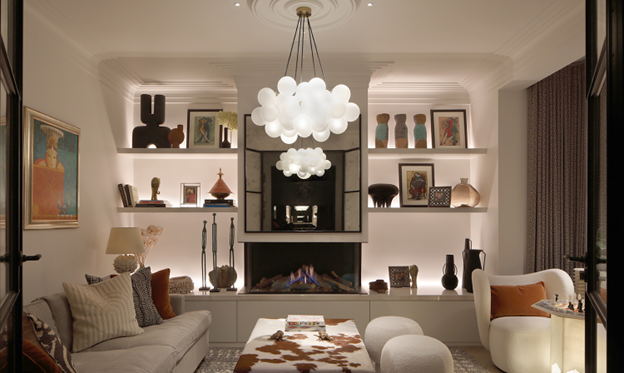
Lighting for Residential Spaces
When talking about lighting in large residential spaces the key is to ensure that every area is adequately lit. Thoughtful lighting helps define zones within open layouts, enhances architectural features, and adds depth and character to expansive areas. For high ceilings, use pendant lights or chandeliers to bring the light closer to the living space and create a sense of intimacy. Recessed lighting can provide even illumination, while wall sconces or up lights can highlight the height and architectural beauty of the ceiling. Combining these techniques ensures a well-balanced and visually appealing lighting design. Here are a few creative lighting hacks for expansive residential spaces:
- Floor-to-ceiling art or light fixtures – Consider tall art or lighting fixtures to add up to the verticality of the space.
- Clustered pendant lights – Opt for clustered pendant lights, especially in double-height ceilings to draw the eye upward and create a sense of balance. By choosing different shapes, sizes, or even colors, clustered pendant lights can add a touch of personality and elegance to a space.
- Illuminate Corners – Avoid dark spots by adding floor lamps, sconces, or directional lighting to underlit corners.
- Use energy-efficient lighting option – Opt for energy-efficient lighting solutions, such as LED bulbs, to reduce energy consumption and lower electricity bills while maintaining optimal brightness.
FAQs
How to light up a large living room effectively?
Use a combination of accent, task and ambient lighting like recessed lights, floor lamps and statement pendant fixtures to create a cohesive and inviting atmosphere.
Best affordable lighting ideas for big spaces?
Use energy efficient LED bulbs, lamps and track light that can be directed to specific areas as needed without overspending.
Tips to improve lighting in large areas?
Focus on layering lighting, incorporating dimmers, and using reflective surfaces like mirrors to enhance light distribution and reduce dark spots.
Energy-saving lighting solutions for spacious rooms?
Opt for LED lights, install motion sensors, and use natural light during the day to reduce energy consumption while keeping the space well-lit.
Unique lighting techniques for open spaces?
Experiment with pendant clusters, track lighting, or floor-to-ceiling fixtures to add drama and enhance the flow of light across the expansive area.
